

Interview with Antiracism Powerhouse, Roxy Manning, PhD
by Sage Nestler, MSW
*Originally published on July 12, 2023 - Updated on February 2, 2026
In 2023, I interviewed Roxy Manning, PhD for her book How to Have Antiracist Conversations: Embracing Our Full Humanity to Challenge White Supremacy. Her insights are invaluable, and a great start to Black History Month.
What is the “blindfold of privilege”?
With this term, we’re trying to raise awareness that we truly only know what we know. Our understanding of the world is often limited by what we can experience, and the knowledge our past experiences lend us.
I had a friend draw this cartoon for me.
It shows some folks with blindfolds on. They were placed around an elephant, which they had never before encountered. When they were asked to describe what it was, each of them reached out and touched the part in front of them.
But when describing it, they could only talk about it from the experiences they had before.
The one touching the trunk says, “Oh, it’s a snake,” the one touching the leg says, “Oh, it’s a tree trunk,” and so on. Each of them is convinced that their understanding is the true one. Their blindfolds prevent them from perceiving the whole picture and constrains them to fit what they can perceive into their already established world view.
Another way that people describe this concept is:
If I’m a fish deep in the ocean, do I actually understand that I’m in water?
Can I even understand that for some folks the very thing that is so perfect and life-sustaining for me is fatal?
So, when we talk about the blindfold of privilege, it’s an acknowledgement that there is a lot we can’t see without concerted effort because we’re so immersed in our own experience.
I am someone with a fair amount of privilege. I’m an English-speaking immigrant in the United States. That meant that I was able to access education and succeed in ways that someone who didn’t have English as their first language might have a harder time doing.
I have a PhD. It means I get a certain amount of respect when I walk into a room that is automatically afforded to me.
These are examples of where, because I have these identities, I might not be aware of the struggle that a Spanish speaking immigrant might have in the classroom or the workplace, or the disdain that somebody who is trying to intervene with their child’s teacher who doesn’t have the same degrees that I have might experience.
I see the world from my social location and might assume that my experience and the strategies that work successfully for me are universal and would work for anyone who attempted them.
How can we remove the blindfolds?
One huge suggestion is really just about being curious.
We live in a time when there is huge access to media, documentaries, books, movies — so many ways to learn about the experiences of folks who have different lives than we do. While many of what we might come across are woefully stereotyped, there’s also quite a lot that of media and knowledge that is not.
So get curious and learn.
Be open to feedback. See it as an invitation to curiosity. We often don’t become aware that we’re wearing those privileged blindfolds until someone says, “Hey, you’re kind of living in your own world. You’re not seeing my reality.”
Unfortunately, many of us don’t respond with openness. Often, we discount them, find reasons they are incorrect, and say, “My viewpoint is the accurate one. You’re just not seeing me, seeing my reality.”
Instead, the invitation is to be curious. Ask yourself:
What is it that I’m missing?
What is it that I need to understand from that person’s experience?
If you’re still struggling, you can even ask yourself:
How am I different from this person?
What aspects of my identity are different from theirs? H
How might that inform the different experiences that we’re having?
So, let’s say a fellow parent is telling me that the teachers don’t respect their kids and are not listening to the parent’s concerns.
Don’t respond with something like:
Well, teachers always treat my kids okay and they’re so responsive to me. I wonder what your kids are doing wrong.
This is projecting or applying our world view to their situation.
Instead, I might wonder:
What’s different between me and that parent, my family and that family?
It is then I might realize that I have a PhD, and that parent didn’t finish high school.
My family has resources and time that we contribute to the school, so I’ve been in the classroom helping out the teacher.
This parent works many hours and does not have the time or money to contribute and has only met the teacher at parent-teacher’s night.
Thinking of these things can help me realize that maybe part of what’s happening is that the teacher is, consciously or subconsciously, responding with trust in my intentions, but has written the other family off as disinterested and poor. Thus, treating us differently.
I’ve never had the experience that they’re having and learning to acknowledge that is key.
For another example:
I’m a black woman. As we were thinking of how to get the word out about my upcoming books, the advice from marketing people was to have an active social media campaign.
For many of them, often white men, they were able to share their voice on social media and were met with excitement and joy. They had a blindfold on in relation to this — that everyone would have the same experience.
I had to share that it’s been hard for me to share my work on social media. That I’ve had people threaten to come to workshops I was leading to show me what pain was, have had graphic images of people being dismembered sent to me, or lots of profanity and pejorative comments.
I asked what they did to manage that sort of response. And they didn’t immediately know.
It hadn’t occurred to them that this was my response. I know other women have talked about this, so it’s not new. But from their social location, it didn’t touch them. If they had heard about it, it wasn’t integrated. The privilege blindfold prevented them from taking seriously this concern and integrating into the advice they would give new GM, female authors.
What insight can you give on how to approach conflict in a constructive way?
Many times, when we experience conflict, we also immediately begin to judge. We either believe the other is wrong, and perhaps evil, or we turn that judgment on ourselves — it’s our fault, we did something wrong.
We can jump straight to strategy — we have an idea of what we want that would make things right, often from our perspective. Regardless of where the judgment is directed (inward or outward), as long as I’m blaming and judging someone, I’m not going to be as constructive in my approach to conflict.
One way to get out of the cycle is to shift from thinking “whose fault is it” to “what are the needs each person is trying to meet?”
When I talk about needs, I’m not using it the way we use it colloquially. Instead, I’m talking about our deepest values and motivations — universal human needs in the Nonviolent Communication framework. Those needs are things that we all value and need to thrive. They include the obvious ones, like food, water, shelter, health, physical safety, and the more intangible ones — like care, respect, understanding, equity, trust, choice, hope, contribution, and support.
There are quite a few others, but their main characteristic is that they describe qualities and characteristics that everyone wants at some point in their life. If we can determine what unmet needs are driving this conflict — what is important to us at this deep level of values and what is important to the other person — we are more likely to find a path to address the conflict.
First, I like to figure out what actually happened. What was the action or words that sparked the conflict?
I call that the external observation.
When my colleague did not acknowledge my contributions in our joint project, part of my distress is anger related to just that external observation — it didn’t meet my needs for acknowledgement or to be seen.
I also want to understand how those actions or words connect to my life.
But when I start to reflect on what else might have contributed to my pain, I might realize it stimulated memories of similar oversights I’ve experienced. These memories and personal associations are my internal observation.
When I was overlooked again, it stimulated memories of the numerous times my work has not been acknowledged in the past. I might become aware of a cumulative impact — my belief “I’m never going to be appreciated no matter how hard I work” might make the impact worse and deepen my unmet needs for respect, to be seen, and trust in my value.
I also want to notice if anything was stimulated at the level of systemic inequities.
This awareness of the patterns in our society in which this behavior occurs is a systemic observation I might make. My white male colleague might have had the same anger about wanting acknowledgement, but the intensity is less because it’s only about this one instance. There isn’t a systemic pattern in society of ignoring the achievements of men, especially white men.
But for me, I also connect to the heartbreak and anger of the countless Black women whose work has been appropriated. I connect to the ease in which folks focus on any missteps in the workplace for Black folks especially when they are congruent with stereotypes, while not seeing or recognizing achievements that challenge the stereotype.
When I connect to all three levels at which I experienced the incident, I can get start to ask myself at which level I want to address the conflict.
Do I want to focus on the external observation, and request a repair in the moment — perhaps a statement made addressing the oversight?
Sometimes we get that, but we’re still upset because the other levels have not been addressed.
Do I also need to get support to dismantle these core beliefs I’m holding that make these incidents so painful?
I might not turn to that colleague who did not acknowledge me support — I may Iring it to my therapist, or to members of my Black women employee resource groups for shared reality and understanding.
It could be that when I understand that a large part of my anger is despair and rage at the systems of bias and inequities, I realize I want to find a solution that’s not just about an immediate repair but creating a structure to prevent this from happening again.
Knowing where I’m feeling the pain and what needs are most activated in me can help me look for solutions that will address where the challenge is.
I also want to be curious about the other person’s needs. If I can make a guess on the needs they were trying to meet, I can include those needs when working to identify next steps to the conflict.
This can be difficult.
We often get stuck on the behavior (and our judgment of the behavior) and don’t connect to the needs that motivated it.
In psychology, we have the fundamental attribution error.
If I made the same mistake (forgetting to acknowledge a colleague), I can easily think of a reason I did that, a need I was trying to meet. But with when someone makes that mistake, I find it harder to think of the reasons why they did it and instead go straight to judgment. If I did the same thing, I could imagine feeling sad for the error and holding myself with compassion as I connected to perhaps really wanting to be efficient and in my haste, had not included everyone that I genuinely wanted to acknowledge.
Whatever the reason, we often understand our needs and can see how our behavior was an attempt (albeit flawed) to attend to those needs.
What are some examples of microaggressions and coded words? How can we understand the feelings that arise from them?
Microaggressions are statements or actions that convey a message, often unconsciously, about a stereotype or negative belief related to a person’s group identity. Dr. Monnica Williams says that microaggressions serve to reinforce beliefs about people’s expected station in life/place in the world. Here are some I’ve experienced and the messages one might perceive:
While I’m walking with my toddler, a stranger says, “She’s so pretty. She doesn’t look Black at all.”
Message: Black people aren’t pretty. Light skin and more European features are beautiful.
When the line for first class is called and I join it, the gate agent tells me they’re only calling first class now and asks me to wait for my section to be called.
Message: Black folks don’t belong in first class.
I stop a clerk at a high-end makeup store to ask about the ingredients in a product I’m holding. Before I ask my question, she says, “Do you want me to show you where the sales items are?”
Message: Black people are poor and can only shop at this store if they are getting a huge discount.
As fellow graduate students are talking about how competitive the job market is and sharing worries about getting a job, one turns to me and says, “Well, you won’t have to worry since you’ll get an affirmative action position.”
Message: Black people can’t compete equally in the job market. We’re not as good as other folks and can only succeed if we’re given an advantage.
My son received an academic merit scholarship and is visiting the college on admitted students day to see if he will attend. A staff person welcomes him to the school and says, “So, which of our teams will you be playing on?”
Message: Black boys are not smart/academically gifted. They must have been accepted to the school because of their athletic ability, not academics.
I’m chatting with a white friend and her mother while we wait for our table to be ready for lunch. A hostess walks up our group, steps between me and my friends. Turning to them says, “Table for two, right? Your table is ready now.”
Message: White people can’t be friends with Black people.
Coded words are similar to microaggressions in that they also often convey messages about a group that the person is a member of. People often use coded words to talk about a group when they don’t want to be seen as targeting that group.
For instance, my neighborhood has a NextDoor group. There has been a lot of public censure of the dialogue on similar groups when people report a Black person walking down the street for suspicious behavior, rightly calling out that people are stereotyping and targeting folks who are just living their life. In response, people have often won’t explicitly say the person’s race, but still do the same stereotyping. Instead of using racial terms, they’ll say words like, “immigrant” to mean Latine or “looks like they’re from the East side of Oakland” to mean Black. This happens in other settings also. People often use location, which because of the legacy of redlining housing covenants and discrimination is often quite segregated, to reference a certain neighborhood.
Currently, when people complain about unqualified affirmative action recipients taking spots from qualified people, it’s often a code for admission policies that benefit primarily Black, Latine and Indigenous folks. Even though affirmative action recipients in sheer numbers are more likely to be legacy admissions, who are predominantly white, or that white women benefited the most from affirmative action policies, very few people believe the efforts to dismantle affirmative action was an attempt to dismantle legacy admissions.
Instead, in the language used in the Supreme Court opinions and in the debates about this issue, it’s clear that everyone understood affirmative action was a code for the admissions of Black and Brown folks above all else.
When we experience this kind of coded language or microaggressions, we can experience a huge range of emotions. We all want to be evaluated based on our individual achievements and our own behavior. When we are not, we might feel angry and shocked. We may walk through our day guarded, defensive. If I asked you to walk down a road, and your experience told you that at completely unpredictable intervals, someone would throw ice-cold water on you, you would be leery. You would treat each approaching stranger with suspicion — is this the person with the hidden bucket, ready to dash cold water on your sense of safety and belonging. We can do the same when faced with microaggression after microaggression.
At some point, a rational person begins to wonder — when will it happen again? We hold ourselves back, be less vulnerable, so that we don’t open ourselves up so vulnerably to more harm. We might feel helpless and despairing.
No matter what I do, no matter what steps I take to protect myself, we still experience microaggressions. I know that before I found my wonderful doctor, every time I met a new medical professional, they would assume I didn’t know anything. I would be spoken to in simple language, given explanations for basic medical conditions or activities that, from my perspective, were common knowledge (do you know what diabetes is; do I understand how to use a computer to access my account). I began defensively using my titles, dropping my education, naming that I had worked as a psychologist in a primary care clinic.
Sometimes it worked. When it did, I felt mildly resentful and sad that I had to do this — so wanting dignity and an easy trust in my capacity. And when it didn’t, I felt disconnected, helpless and hopeless.
If our behavior and our choices don’t impact how we are seen or have less impact than what someone thinks they know about us just by looking at us, of course it makes sense that we’d feel angry, despairing, frustrated. If our choices cannot protect us from harm, of course we would be hypervigilant and anxious while we waited for the next instance of harm.
Our feelings are not a failing in ourselves. They are a direct and logical response to the persistent unmet needs that we experience in the face of unpredictable, harmful endless microaggressions.
How can we recognize subtle forms of violence with nonviolent responses?
When a subtle form of violence (such as microaggressions) occur, one of the factors that can be “crazy-making” is that there can often be alternative reasons for the behavior.
Did you offer to show me the sales rack because everyone who walked in the store today asked you about the sale items, or did you say that to me because of your unconscious beliefs that I couldn’t possibly afford the full price items?
Some folks from the Global Majority have told me that they don’t know how to show up when this happens. If I don’t KNOW that it’s racism, can I still point it out? Am I being too sensitive if there’s another plausible reason for their behavior?
I say absolutely yes. You can let the person know about the impact they had on you. Regardless of the reasons for their behavior, that impact was still there.
I can say, “I can imagine a host of possible reasons why you offered to show me the sales rack. I want you to understand what it was like on my end. When you did that, it reminded me of all the times I’m followed in stores, all the time folks who look like me are denied the same level of service because people think we don’t tip, or that they won’t make a good commission off of us because we’re always poor. It made me question whether or not this is a store where I will be treated with the same respect and given the same support as other folks get.”
And I like to end these with a request of some sort. The request comes from my understanding of what level of observation I’m addressing, what needs I want to meet. If I’m at that external observation level, maybe my request is, “just so I know you got me, can you share why it was hard for me that you asked me that question? What you got from what I said?”
If I’m at the systemic level of observation, my request might have to do with wanting to change the stores’ policies and training of employees.
My request might be, “And I think this is bigger than just you. Can you tell me who the manager on duty is because I want to talk with them about changing how employee’s greet new customers.”
The main tip is to first be very clear about naming to the person what you observe and making a request that is connected to the level where you want change to happen.
Notice that nowhere did I respond violently.
I’m not dropping the issue. I’m going to talk about it, engage the store clerk and the manager in dialogue. They might feel uncomfortable and believe that my insistence on talking about one of the taboo subjects, is violence. It is not. Their discomfort is not a sign that i’m being violent. Instead, it means they are doing the uncomfortable but unnecessary work to recognize and combat subtle forms of violence, especially in relation to race
Can you tell me about the time you were pulled over by a white police officer and the trauma you endured from this experience?
When I was in my early twenties, I was in a car traveling on Highway 17 in New York, on my way to visit my boyfriend who lived in upstate New York. A friend was driving. We were having the kind of earnest conversations that twenty-yearolds have, letting our minds wander along with our hearts. My brother slept in the back seat, leaning against the window. The dark night and blurry scenery wove a cozy cocoon where we could all relax, enjoying each other’s company. My friend and I were startled out of our cozy warmth when flashing lights jolted into view. A police car had pulled up behind us, following us.
Did it want us to pull over?
We looked at the speedometer-we were driving just a mile above the speed limit. We nervously pulled over onto the side of the road. The lights and sudden shift in movement had jostled my sleeping brother, and I heard him groggily attempt to make sense of what was going on.
“Are we there already?” he asked sleepily, from the back seat.
The officer tapped on the window before we were able to answer my brother. My friend rolled the window down and instead of receiving the usual request for license and registration, he was asked to step out of the car.
The officer had his hand resting on his gun.
They walked together out of earshot of the car. My brother and I sat in the car, confused and anxious, unable to make sense of what was happening. We watched the officer and my friend talk, at first with visible tension in their bodies. After a few minutes, I saw the tension slowly dissipate-the officer’s hand slid off his gun, his shoulders dropped, his posture relaxed. My friend walked back to our car while the officer walked to his. I was even more confused. When my friend got back in the car, he sat quietly for a little while. The police car drove away, and then my friend started the car and we got back on the road. My brother and I kept asking him about what had happened, but he seemed reluctant to tell us.
Finally, he spoke. But I could tell, as he was speaking, that he was wishing that what he was saying wasn’t real.
“The officer saw us passing him on the road. He saw me-a white man-in the driver’s seat, and you next to me, a Black person. And he saw your brother in the back seat. He wanted to make sure I wasn’t being kidnapped.”
None of us knew what to say. I felt a rush of anger in my body: like a slap. Before I could really feel the anger, it became shame. Hot and overwhelming. I felt as though this officer’s racism meant I had done something wrong. I could tell my brother was vibrating with anger, but he didn’t know how to navigate what had happened either. We were all silent. We didn’t talk anymore about it, we turned the radio on and finished the drive in silence. This officer, who had seen Black folks and white folks driving together, couldn’t conceive of usas being part of the same Beloved Community.
Excerpt from How to Have Antiracist Conversations, Manning 2023, pp 19–20
This situation was hugely traumatic to me. Before this, I had experienced racism. Professors who didn’t see my value or trust my work, peers who made comments about my facial features, hair, dark skin.
But I hadn’t had that visceral sense of being in physical danger until this moment.
I realized both that this wasn’t about me — the officer didn’t pull us over because we were being threatening, because we had done anything wrong. He pulled us over because what he saw in the car — Black and white folks driving together — didn’t fit his world view. In some ways, this was a bit freeing because it helped me begin to internalize something — there was nothing I needed to change, or indeed could change, about myself that would make me safe.
I could start to realize that the idea that acceptance by white folks, and ultimately safety, could come from being the model minority, of talking the right way, wearing the right clothes, getting the right degree was a myth.
And at the same time, it was deeply traumatic, because it also meant that there was absolutely nothing I could truly do to protect myself. That walking down the street, driving in a car, anything I did could put me at risk. I would go about my life — like countless other Black folk in America have had to, but that dread, that fear not just for my emotional well-being but my actual safety — was now deeply implanted. I didn’t realize how deeply until a few years later when this incident I write about in the book happened:
Several years later, I was driving in a rural area, this time alone, again at night. As I took an exit ramp, I switched lanes on the ramp to make the left turn I knew was coming. Again, those flashing lights appeared in my rearview mirror. I was terrified. I took out my phone and called 911, telling the operator that I was being pulled over and was going to drive to a gas station so that I could stop in a well-lit place. As I drove three minutes to reach a gas station, I started trembling. By the time I parked and the officer approached me, I was shaking and crying, tears streaming down my face, taking hiccupy breaths.
I didn’t know what PTSD was at the time, so I didn’t know how to soothe my dysregulated body. I felt so exposed, so unsafe. The young, white police officer at my window looked alarmed when he saw me.
“What’s wrong,” he asked.
“Nothing,” I stammered. He looked even more perturbed.
“Do you have a weapon? Are there drugs in the car?”
“No,” I said, tears streaming heavily.
The officer kept trying, confusedly, to reassure me.
“You’ll be fine. Everything’s fine.” I continued to cry as he explained, “I pulled you over because you switched lanes on the ramp. You’re not supposed to do that.”
He left without giving me a ticket. I sat in the brightly lit gas station, shaking and crying. In that moment I realized what was terrifying: I did not believe that this officer would see me, see my humanity. That he would see me as part of his Beloved Community, someone deserving of care. I was convinced he would see me as a threat, an outcast from his community, so that my life was in danger from his traffic stop.
Excerpt from How to Have Antiracist Conversations, Manning 2023, pp 20–21
And it’s come up in multiple ways. I worry about not just my safety, but my teens.
They grew up in Silicon Valley. I know it seems cliched but having to talk to my teens when they began driving on what to do if a police officer pulled them over, to lower (not eliminate, just lower) the chances that a traffic stop could be fatal was heartbreaking. When they were thinking of college, eliminating whole areas of the country because I realized my kids don’t know how to code-switch in areas where white supremacy is even more blatant.
I go through the world, still showing up, living life, but knowing that there’s an unpredictability about it that could be tragic. The undercurrent of anxiety that pervades so many aspects of my life, that subtle sense that nothing is truly predictable or safe anymore, is one of the subtle forms of trauma that experiences of these kinds of racism can stimulate.
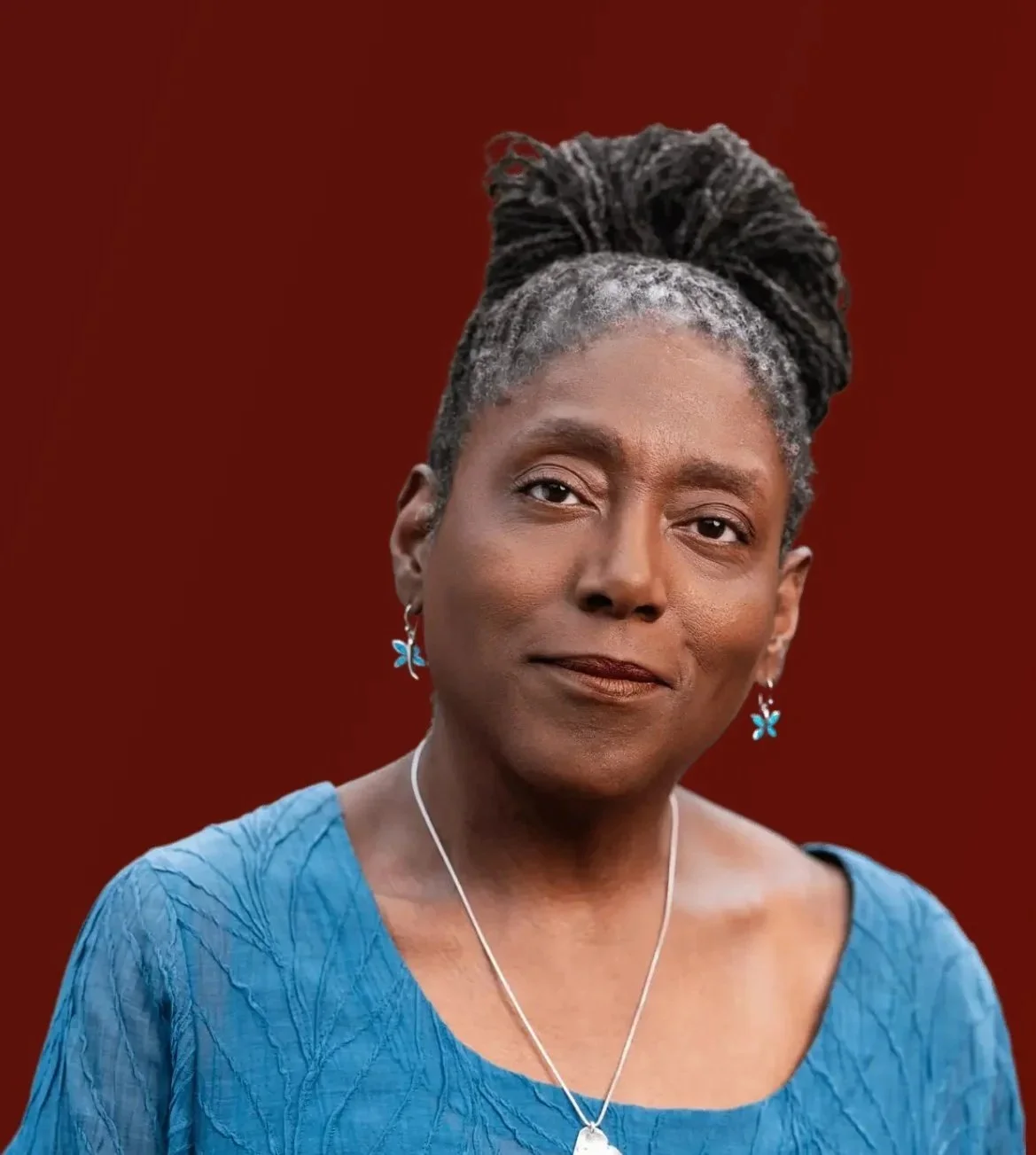
About Roxy Manning, PhD
Roxy Manning, PhD is a clinical psychologist and certified Center for Nonviolent Communication (CNVC) trainer. She brings decades of service experience to her work interrupting explicitly and implicitly oppressive attitudes and cultural norms.
Dr. Manning has worked, consulted, and provided training across the US with businesses, nonprofits, and government organizations wanting to move towards equitable and diverse workplace cultures, as well as internationally in over 10 countries with individuals and groups committed to social change. She also works as a psychologist in San Francisco serving the homeless and disenfranchised mentally ill population.
She is the author of How to Have Antiracist Conversations: Embracing Our Full Humanity to Challenge White Supremacy and the co-author with Sarah Peyton of the companion text, The Antiracist Heart: A Self-Compassion and Activism Handbook.
Find Roxy Manning, PhD. Online: https://roxannemanning.com/
